The Quiet Revolution Happening in Your Neighborhood
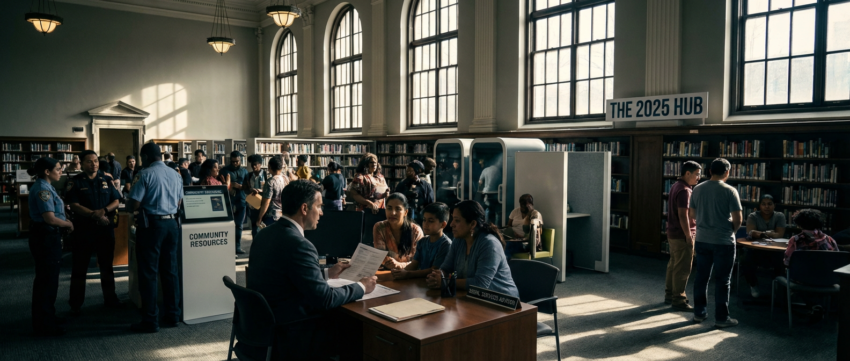
If you haven’t been to your public library in a while, the person behind the desk might not be shelving books anymore. They might be connecting someone to mental health resources. They might be helping a neighbor navigate benefits enrollment. They might be trained to recognize the signs of crisis and know exactly which community partner to call. This isn’t speculation or wishful thinking. It’s happening right now in thousands of libraries across the country, and it happened so gradually that most of us didn’t notice it was a complete transformation.
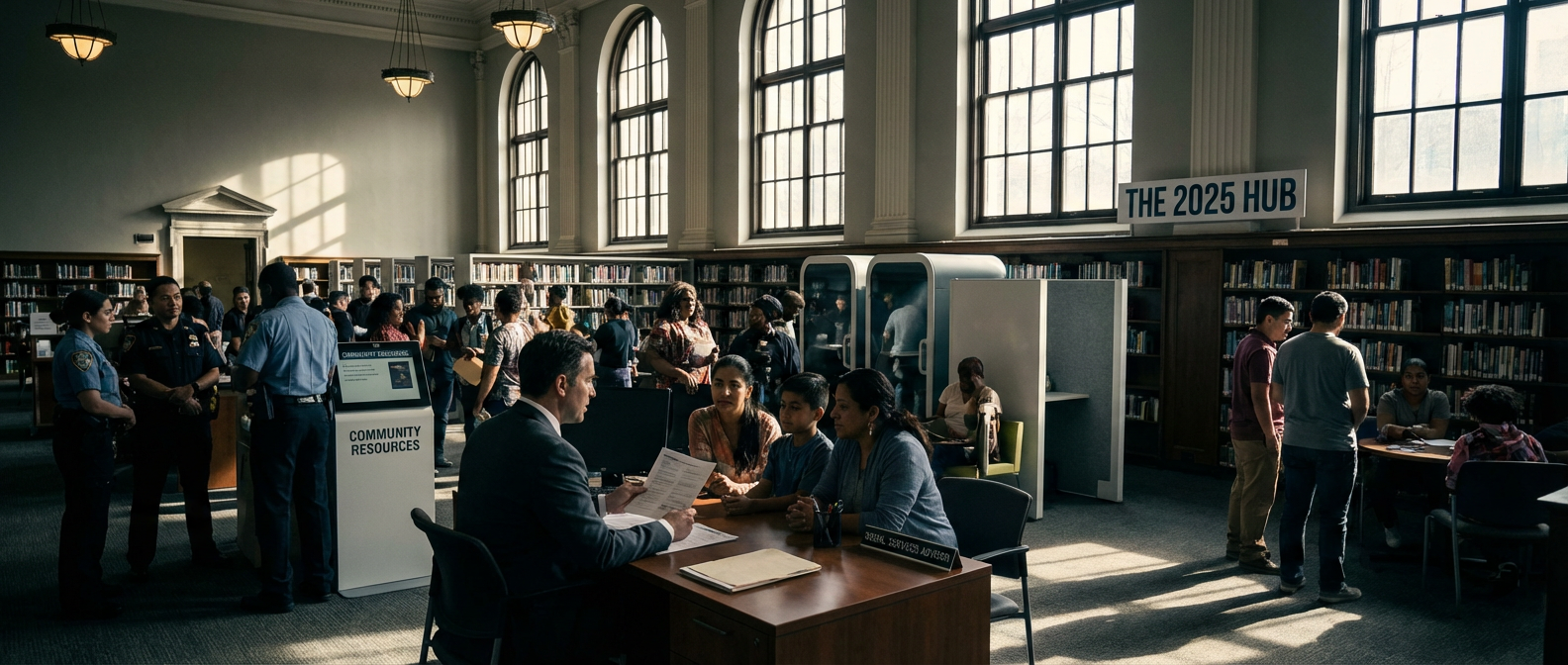
The numbers tell a story worth paying attention to. According to the American Library Association State of America’s Libraries 2025, 74 percent of public libraries now offer at least one social service that goes beyond traditional library functions. These aren’t optional add-ons or pilot programs anymore. They’re structural. Libraries are embedding social workers, offering job training, providing mental health referrals, and building partnerships with local health organizations. The shift is real, deliberate, and it’s changing what it means to be a public institution in 2025.
This happened because libraries saw a need, and libraries do what libraries have always done when communities change: they adapted. But the scale of this adaptation is significant enough that it deserves to be talked about, understood, and supported.
What Denver Figured Out Before Everyone Else
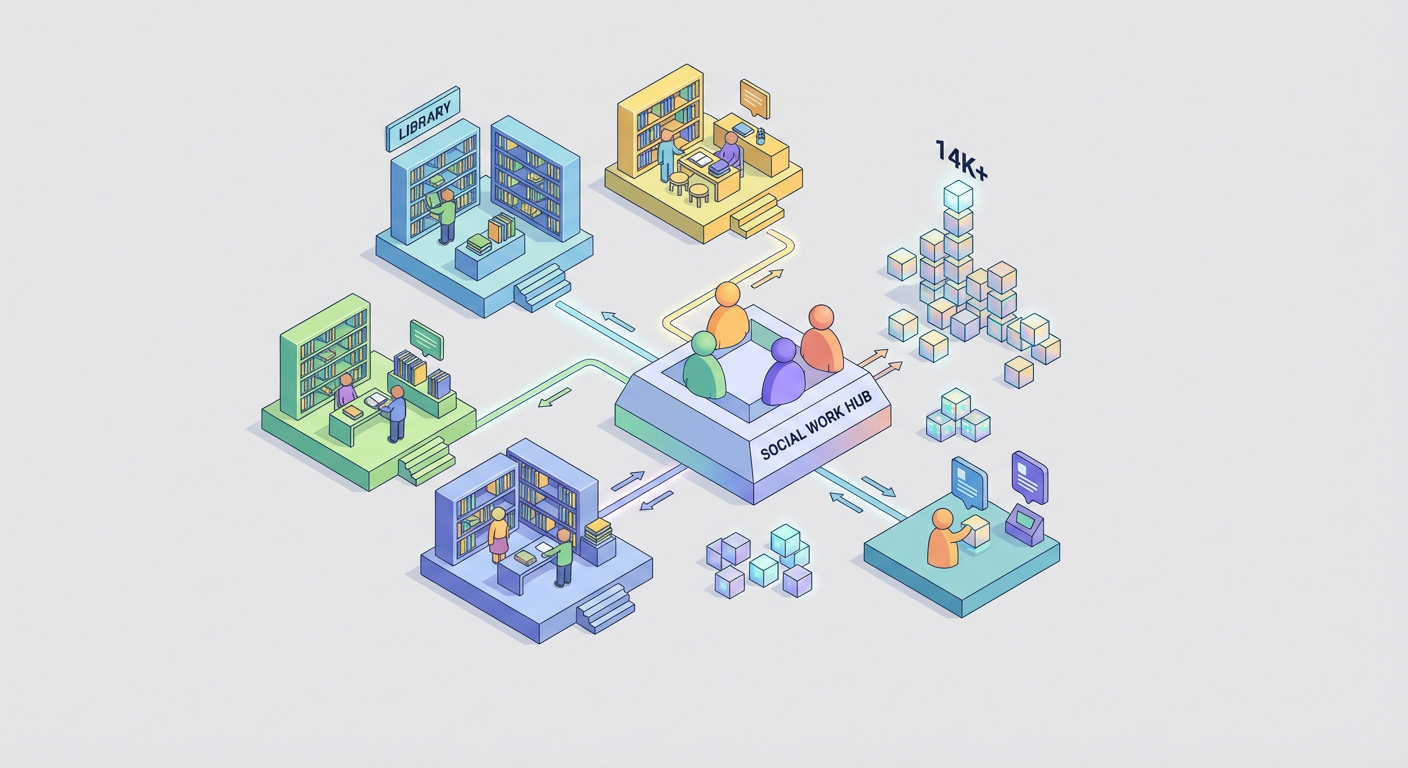
Denver Public Library gives us a useful case study in how this works in practice. Back in 2018, the library system made a deliberate choice to embed licensed social workers in branches. It wasn’t a theoretical experiment. They hired professionals with genuine credentials and training, placed them in actual branches where they’d be accessible, and let them do the work. Seven years later, the data shows what that commitment looks like on the ground.
In 2024 alone, Denver’s embedded social workers handled over 14,000 patron interactions. That’s not fourteen thousand passive referrals or information sheets handed out. Those are conversations. Assessments. Real connections between people who needed help and someone trained to understand their options. Some of those interactions led to housing resources. Some led to treatment referrals. Some led to benefit enrollment. The library became a place where a person in crisis could walk in and find someone who knew what they were doing.
What’s instructive about Denver’s approach is that it required resources, planning, and institutional will. This didn’t happen by accident. The library system had to budget for it, train staff, establish protocols, and work with community partners. They had to decide that part of the library’s job was social infrastructure. The fact that they did it seven years ago, before this became a national trend, suggests that libraries across the country have been watching, learning, and deciding to do the same thing.
The Money Behind the Movement
Large-scale change requires funding, and funding requires someone to decide that this work matters enough to invest in it. The Institute of Museum and Library Services awarded $282 million in grants in fiscal year 2025, with a record 31 percent of those funds directed specifically toward libraries working as community resilience centers. Thirty-one percent. That’s not a small pilot line item. That’s a deliberate national investment in the idea that libraries should be anchors for community response.
If your library is thinking about expanding its social services, there’s actual money available to help make it happen. The Institute of Museum and Library Services Grant Programs list their application processes openly. Libraries are being encouraged to apply. The funding infrastructure exists. What remains is the decision-making at the local level, which is where community voices actually matter.
Why People Are Coming Back
Here’s what changed about who uses libraries and why. A 2025 Pew Research Center survey found that 65 percent of Americans visited a public library at least once in the past year. That’s a solid, consistent number. But look at the reason why: 28 percent of recent library visitors cited social services or community programming as their primary motivation for being there. In 2016, that number was 11 percent. That’s a 154 percent increase in nine years. People aren’t just coming in to check out books anymore. They’re coming because libraries have become reliable places to access help.
San Francisco’s library system offers another concrete example. Since implementing a harm reduction partnership in 2023, branches have distributed over 1.2 million naloxone doses. That’s an actual life-saving intervention happening in library spaces. The library system decided that addressing the overdose crisis was part of their job, and they’re measuring their success in lives sustained. It’s ambitious. It’s direct. It’s working.
What This Means for Your Community
The shift is real, but it’s not automatic. This doesn’t happen everywhere equally. Some libraries have resources and partners and institutional momentum. Others are still figuring out what this could look like. That gap matters because it determines whether someone in your neighborhood has reliable access to this kind of help or whether they don’t.
If you want to understand what your library is actually doing right now, the answer is in your city council minutes, your library board meeting notes, and your library’s annual report. Show up. Read. Ask questions. Find out whether your library is moving toward this model and what they need to accelerate it. Find out what gaps exist. Meet the librarians and social workers and program coordinators who are doing this work. Most of them are deeply committed. Most of them are also running on constrained budgets and goodwill.
This is infrastructure that works because people decided it mattered enough to build and maintain. The next phase of this transformation happens when communities actually engage with it, support it, and hold institutions accountable for keeping it resourced. Your library probably just became something larger and more necessary than it was five years ago. The question now is what you do with that knowledge.