
Why Every City Suddenly Has a Youth Mental Health Task Force
Something shifted in January 2025. The U.S. Surgeon General released an advisory that essentially told local governments what many parents and teachers already knew: our kids are struggling, and the infrastructure to help them is dangerously thin. Within six months, at least 200 municipalities across the country launched or expanded youth mental health task forces. That is not a small number. That is a coordinated recognition that this problem lives in your city, in your schools, and that someone needs to do something about it right now.
The numbers backing this up are the kind that stick with you. The CDC Youth Risk Behavior Survey Data released in 2024 showed that 40 percent of high school students reported persistent feelings of sadness or hopelessness in 2023. Think about that for a moment. Four out of every ten teenagers you see walking down the street. That figure has nearly doubled since 2011. This is not a trend. This is a crisis that has been building quietly in the background while everyone was busy with other things, and now it is finally impossible to ignore.

What a Real Youth Mental Health Budget Looks Like
San Antonio offers a useful case study in what actual commitment looks like. When the city finalized its 2025 budget, it allocated 18.7 million dollars to an expanded SA Mental Health Initiative specifically for young people. That sounds like a lot of money until you think about it per capita, but the details matter more than the total. The city embedded 47 licensed counselors directly in public schools. Not an outside contractor coming in once a week. Actual mental health professionals in the building every day. They also funded 24/7 crisis text infrastructure, meaning a teenager in crisis could text for help at three in the morning and reach someone who could talk them down and connect them to resources.
This is what translated priorities look like. This is what “we take this seriously” actually means when you convert it into a budget line item. It did not happen by accident, either. Someone had to fight for it. Someone had to read the data, build the case, and push it through the endless machinery of municipal budgeting. Then someone had to keep pushing. That is the work happening in your city right now, whether you know about it or not.
How to Find and Read Your City’s Mental Health Task Force Budget
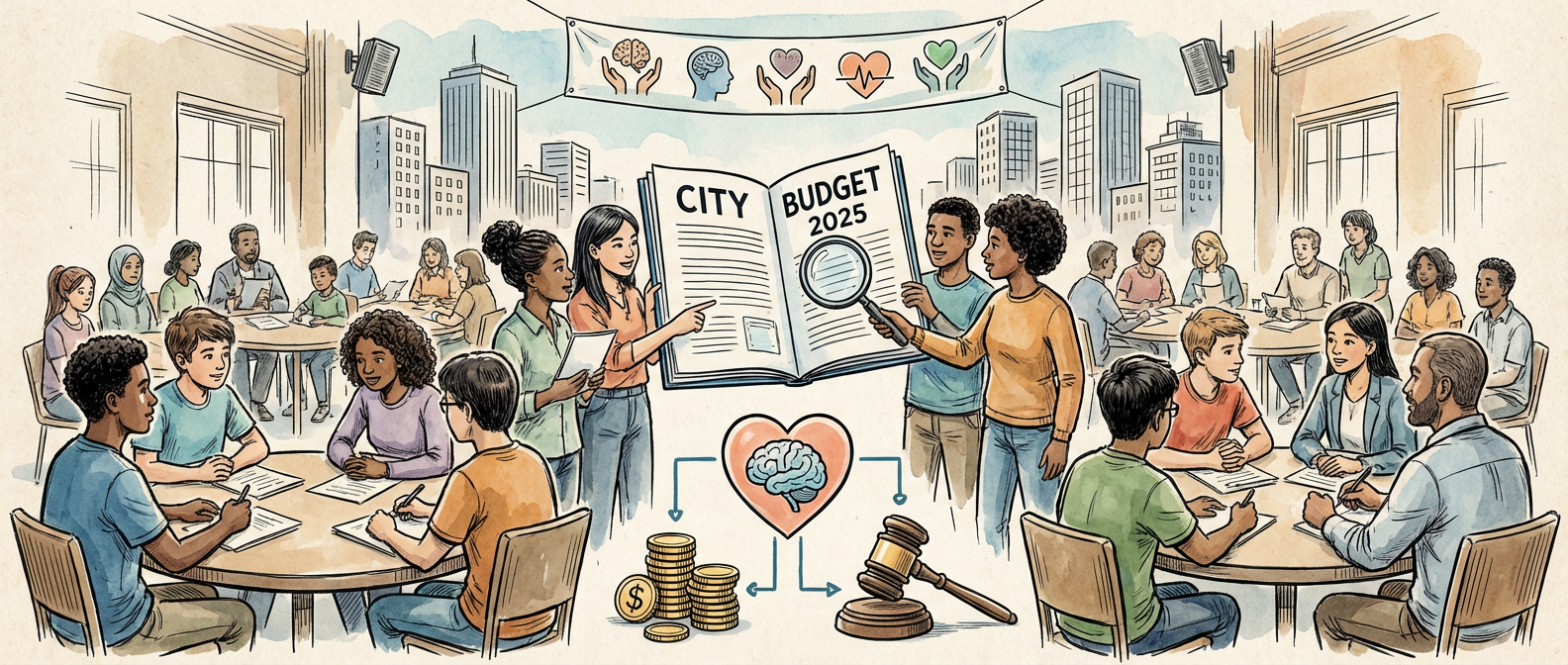
Your municipal budget is public record. This is not a secret. Every penny your city spends is supposed to be transparent, which means you have a legal right to find out what mental health funding your community is prioritizing. Start by going to your city or county website and finding the budget or fiscal reports section. Search for terms like “youth mental health,” “adolescent mental health,” “crisis support,” or “school counseling.” You are looking for line items, not just task force meetings.
If that feels overwhelming, do not worry. Many cities now post budget summaries alongside the full documents. Read the summary first. It will tell you if mental health got any new money this year or if it was level-funded (stayed the same) or cut. Then dig into the specific allocations. How many counselors are being hired? What are the salary ranges? Is there dedicated funding for crisis response? Is peer support infrastructure getting any money, or just traditional counselor models? A 2025 meta-analysis published in JAMA Pediatrics found that school-based mental health programs incorporating peer support components showed 28 percent better outcomes in reducing anxiety symptoms compared to counselor-only models. Your city’s approach to program design directly impacts effectiveness. These details matter.
Look also for what funding is flowing through from state and federal sources. The Substance Abuse and Mental Health Services Administration distributed 2.3 billion dollars nationally in 2025 Block Grant awards, and for the first time, states are required to report specifically on how much of that money goes toward youth mental health initiatives. This new requirement means your state health department should have published that breakdown. If your city is not using state or federal youth mental health funding, that is a question worth asking.
What to Do When You Find It
Once you have read your city’s mental health budget, you actually have several options. The easiest is to share what you learned with people you know. Parent groups, school board committees, community organizations. Most people never read budget documents, not because they do not care but because they do not know where to start. You have now started. You can be the person who says, “I looked it up, and here is what our city is actually spending.”
If what you find concerns you, you can show up. City council meetings often have public comment periods. You can ask questions. You can point out that 40 percent of teenagers reporting persistent sadness does not match a modest mental health commitment in your city’s budget. You can ask why. And here is the thing: the people in those rooms generally want to do the right thing. They are constrained by information and resources, but they are not your enemies. They are your neighbors trying to solve complicated problems with incomplete information.
You can also organize. Connect with the people who are already thinking about this. Attend task force meetings if your city has them, they are usually open to the public. Ask to be added to notification lists. Find the school counselors and mental health coordinators who are doing the actual work and ask them what would help. Then coordinate with other people to provide it. This is how real change happens in communities. Not from heroic individual effort but from groups of people who cared enough to pay attention and then showed up consistently.
The Reading Itself Is the Beginning
I know it sounds like a lot. Reading budget documents, showing up to city council, organizing with neighbors. But here is what actually happens when you do it: you understand your community better. You know where the gaps are. You know what is working. You know who the people are doing the work of keeping teenagers alive and hopeful. That knowledge changes how you move through the world. It changes what you vote for. It changes what you talk about at dinner. It changes what you volunteer for on Saturday.
Your city’s youth mental health budget is not just a document. It is a statement about who your community thinks deserves care and how much that care is worth. Go find yours. Read it. Talk about it. And if you see something that needs changing, start with one phone call or one email. Someone in your community is already thinking about how to make it better. Find them. Help them push.