
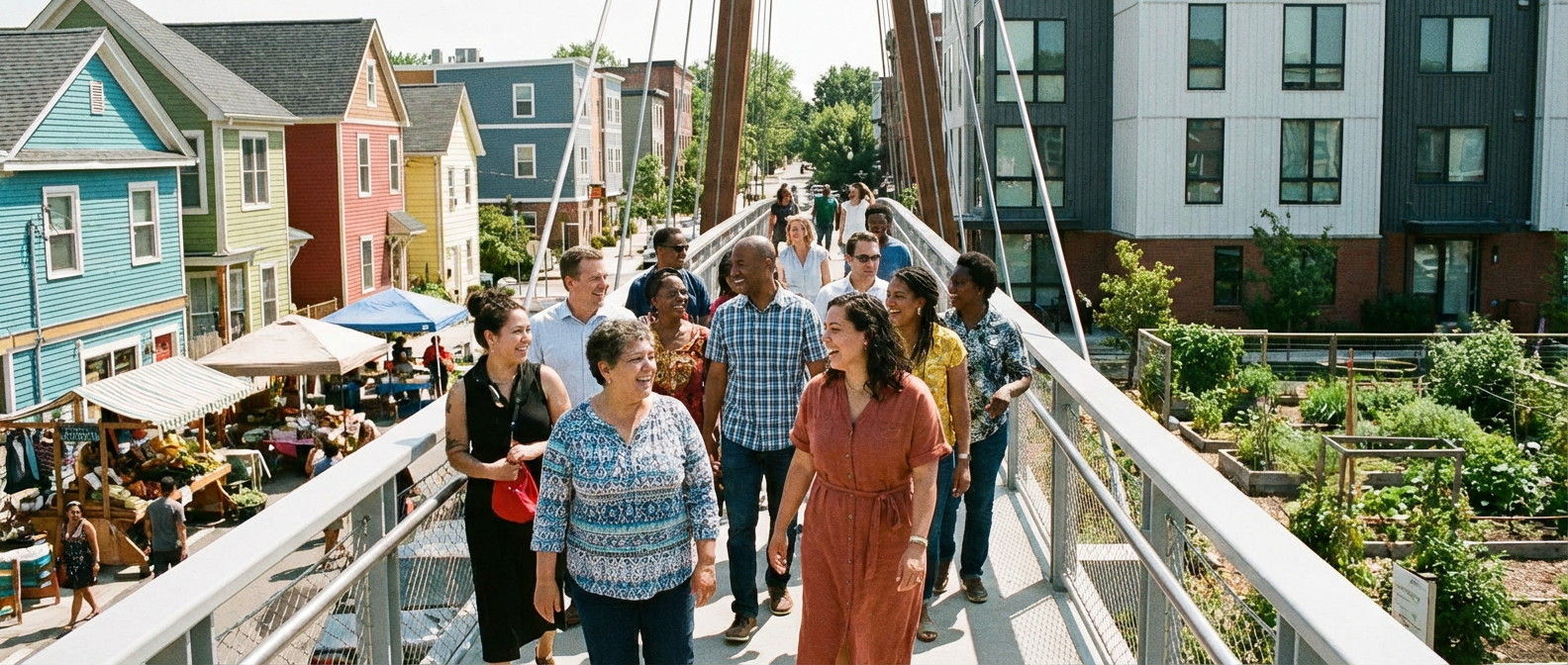
The Fence That Divided Everything
Last Tuesday evening, I watched Maria Santos and David Kim stand on opposite sides of a chain-link fence, both talking past each other about the same plot of earth. The Riverside Community Garden had been thriving for three years when the disagreement erupted over a simple question: should the garden expand into the adjacent lot, or should that space become a playground for the apartment complex next door?
Maria, who has lived in the neighborhood for twenty-five years and helped establish the garden, sees the expansion as essential for feeding more families. David, a recent homeowner with two young kids, believes the area desperately needs safe play space for children. Both are absolutely right, and that’s exactly the problem.
What started as a practical discussion about land use has revealed deeper tensions about who gets to shape the neighborhood’s future. The garden controversy isn’t really about vegetables versus swings. It’s about different visions of community need, complicated by the reality that longtime residents and newcomers often experience the same spaces in completely different ways.
Reading the Room, and the Data
The neighborhood demographics tell a complex story that both sides reference but interpret differently. According to the latest census tract data, our area has seen a 40% increase in families with children under ten over the past five years, while simultaneously experiencing a 15% rise in food insecurity among households earning less than $35,000 annually.
At the heated community meeting last month, these numbers flew around the room like ammunition. David’s group pointed to the lack of playground equipment within six blocks, while Maria’s supporters emphasized that the nearest full-service grocery store requires two bus transfers. Both statistics are accurate. Both represent genuine hardship.
The city’s Parks and Recreation department has remained diplomatically neutral, noting that their budget allows for maintaining existing facilities but not creating new ones. Translation: whatever the community decides, they’re on their own for funding and upkeep. This reality has pushed both groups toward an all-or-nothing mindset that makes compromise feel like defeat.
Meanwhile, the landlord who owns the disputed lot has been quietly watching property values, waiting to see which direction the neighborhood leans before making any commitments. His silence speaks volumes about how community disagreements often unfold within larger economic pressures that residents have little control over.
The Languages of Belonging
Sitting through three community meetings on this issue, I’ve noticed something fascinating and troubling about how each side frames their arguments. The garden supporters tend to speak in terms of heritage, sustainability, and community resilience. The playground advocates focus on children’s safety, property values, and quality of life improvements.
These aren’t just different priorities. They’re different languages of belonging. When Maria talks about the garden feeding families during the pandemic, she’s drawing on a narrative of mutual aid that has deep roots in immigrant communities. When David mentions wanting his kids to play safely outside, he’s expressing an expectation of neighborhood amenities that reflects his experience as a first-time homeowner.
Neither perspective is wrong, but they emerge from different relationships to place and stability. Long-term residents often prioritize immediate, practical needs because they’ve learned not to count on institutional support. Newer residents sometimes focus on infrastructure improvements because they believe civic engagement can deliver predictable results.
The real tragedy is watching these two impulses, both fundamentally about caring for community, drive people apart instead of revealing common ground. Last week, I overheard someone describe the playground supporters as “gentrifiers who don’t understand real community needs.” Two days later, someone else dismissed the garden expansion as “resistance to positive change.” Both characterizations miss the point entirely.
What the City Council Minutes Actually Say
If you wade through the bureaucratic language of the past six months of city council meetings, you’ll find something interesting buried in the Parks Committee reports. The city has been quietly developing a “dual-use space” pilot program that could potentially address both needs, but they haven’t publicized it because the funding mechanism remains unclear.
The pilot would create spaces that have multiple community functions through creative design. Think raised garden beds that double as playground borders, or tool storage that includes seating for parents watching kids play. Three other cities have successfully implemented similar projects, with costs split between parks budgets and community development grants.
But here’s the catch: communities have to apply together, demonstrating broad-based support for a shared vision. The application requires signatures from at least sixty percent of households within a three-block radius, along with evidence of ongoing collaboration between different neighborhood groups.
In other words, the funding exists to give both sides what they want, but only if they can find a way to want it together. The bureaucratic requirement for consensus isn’t just red tape. It reflects hard-won lessons about sustainable community development. Projects that emerge from genuine collaboration tend to thrive. Projects imposed by outside authorities or driven by one vocal group often become sources of ongoing conflict.
Building Bridges in Small Spaces
Last Saturday, something unexpected happened at the garden’s monthly volunteer day. David showed up with his kids in tow, not to argue about the expansion but to help repair the fence damaged in the recent storm. Maria was initially surprised, then cautiously welcoming. By the end of the morning, David’s six-year-old daughter was helping harvest tomatoes while he learned about companion planting.
The conversation that followed wasn’t a dramatic breakthrough, but it was real. David acknowledged that his kids would benefit from understanding where food comes from. Maria admitted that safe play space matters for community families, including those who can’t afford their own backyards.
They started sketching ideas on the back of a seed packet: what if part of the expansion included a small playground area? What if the existing garden had more seating where parents could supervise children? Neither suggestion solves the space shortage completely, but both suggest ways forward that honor different needs.
The most encouraging part wasn’t the specific ideas but the shift in tone. Instead of defending territory, they were designing possibilities. Instead of talking about “us versus them,” they were figuring out what “us” might actually include.
Change in neighborhoods happens through exactly these kinds of small, imperfect conversations between people who initially see the world differently. The fence between Maria and David is still there, but now it has a gate that both of them helped build. That feels like the kind of progress worth growing.