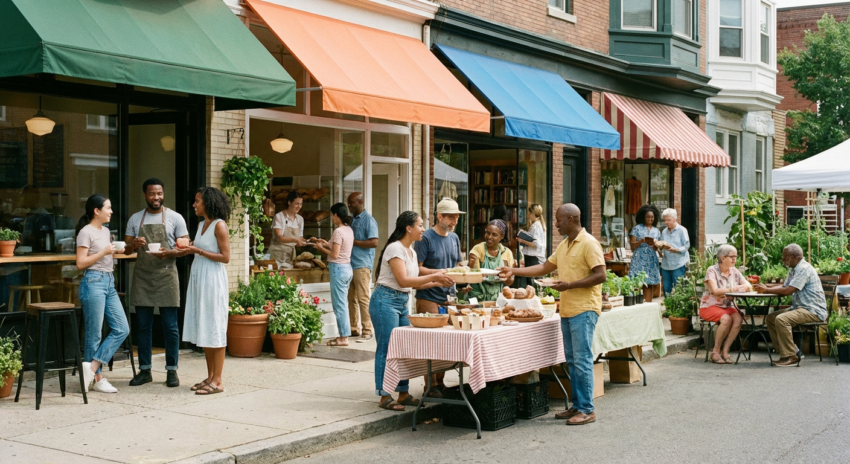
Last Tuesday at 7:47 AM, I watched Maria flip the sign at Corner Grounds from “closed” to “open” while juggling her toddler on her hip and a phone pressed to her ear. She was talking to her supplier about late deliveries, and I could see the stress lines around her eyes even from across the street. By 8:15, the usual morning rush had formed, but something felt different. Mrs. Chen from the dry cleaner next door had brought over a small folding table, and Jake from the bike repair shop was helping set up an overflow seating area on the sidewalk. Nobody had organized this. It just happened.
This is what small business collaboration actually looks like in our neighborhood, and it’s nothing like the glossy partnership announcements you see in economic development newsletters. It’s messy, spontaneous, and built on the kind of mutual aid that keeps doors open when supply chains break down and keeps customers coming back when big box alternatives multiply. The question isn’t whether our local businesses need support. The question is how we build the infrastructure that makes that support automatic instead of accidental.

The Real Network Behind the Storefronts
When I started mapping the actual relationships between businesses on our main corridor last month, the results surprised me. The official business association has twelve members, but the informal network includes twenty-three businesses that regularly share resources, refer customers, and cover for each other during emergencies. Rosa at the bakery has keys to four other shops and waters plants during vacations. The hardware store keeps a bulletin board where other business owners post needs for small repairs or equipment loans. The bookstore hosts informal monthly meetups where shop owners compare notes on everything from point-of-sale systems to dealing with difficult landlords.
These relationships didn’t come from any strategic plan. They grew from proximity, shared challenges, and the simple reality that when your business is your livelihood, your neighbors’ success becomes your success. But informal networks have limits. When the pandemic hit, some businesses knew immediately who to call for help with PPP loans or pivoting to online sales. Others didn’t know those resources existed until weeks later, and a few never found them at all.
The difference wasn’t random. Businesses owned by longtime residents, particularly those who had previous community connections, weathered the crisis better than newcomers or those operating more independently. The network that looked welcoming from the outside had invisible barriers that nobody intended but everyone experienced. Making support systems visible and accessible requires intentional work, not just good intentions.
What Actually Moves the Needle
Direct customer spending is obviously important, but the most effective support often happens business-to-business. When the print shop started offering same-day business card printing for other local entrepreneurs, it created a revenue stream while solving a real problem for startups that couldn’t wait for online orders. The restaurant that began catering lunch for the law office upstairs found a reliable income source during slow weekday hours. These partnerships work because they address genuine needs with convenient solutions.
Shared infrastructure makes even more difference. The mini-mall on Fifth Street installed a common delivery reception area after multiple businesses complained about missed packages and disrupted service. The cost split five ways became manageable, and customer satisfaction improved across all the shops. The food truck cooperative that formed last year pools money for a shared commercial kitchen rental, licensing fees, and bulk purchasing. Individual operators save hundreds monthly while accessing equipment and storage space none could afford alone.
Policy changes often provide the biggest leverage, though they take longer to implement. The city’s new small business permit streamlining reduced average licensing time from six weeks to ten days, but only after eighteen months of business owners attending council meetings and providing detailed documentation of how delays affected their operations. The temporary outdoor dining expansion that started during COVID became permanent last year because restaurant owners presented specific data about increased revenue and foot traffic to neighboring businesses.
Building Systems That Scale
The most sustainable support structures work for businesses at different stages and sizes. The mentorship program that pairs established business owners with newcomers has helped launch twelve new businesses in two years, but its real value lies in preventing common mistakes that force early closures. Experienced owners share practical knowledge about seasonal fluctuations, reliable suppliers, effective marketing on tight budgets, and dealing with local regulations. New business owners get guidance without the formal obligations of franchising or consulting fees they can’t afford.
Resource sharing requires systems that make participation easy and fair. The tool library that three construction-related businesses started has an online calendar where any local business can reserve equipment for daily rates well below commercial rental costs. The shared delivery service launched by retailers who were losing customers to Amazon creates route efficiency while offering local consumers same-day delivery options. Both work because they solved immediate problems while generating modest revenue for participating businesses.
Communication infrastructure matters as much as financial or physical resources. The text chain that started with five business owners alerting each other about suspicious activity after hours now includes eighteen businesses and has expanded to sharing information about supply shortages, utility outages, and special events that might affect foot traffic. The monthly breakfast meetings have evolved into working sessions where business owners collaborate on grant applications, coordinate marketing campaigns, and collectively negotiate with suppliers for better rates.
Where the Gaps Still Exist
Access remains uneven despite good intentions. Language barriers affect participation in both formal and informal business networks. Translation services for important meetings cost money that volunteer organizations don’t have, and important information often circulates only in English. Businesses operating in primarily cash economies may lack the credit histories or documentation required for traditional lending programs, even ones specifically designed to support local entrepreneurs.
Geographic clustering creates advantages for some while isolating others. The businesses along our main commercial strip benefit from foot traffic between shops and shared event marketing. Home-based businesses, mobile services, and shops in scattered locations miss these natural collaboration opportunities. Online directories help with visibility, but they don’t replace the daily interactions that build trust and lead to real partnerships.
Seasonal challenges hit different businesses at different times, making mutual support complicated. The garden center that thrives in spring struggles through winter, while the tax preparation service has the opposite pattern. Businesses that depend on school schedules, weather patterns, or holiday cycles need different types of support than those with steady year-round demand. One-size-fits-all approaches often miss the specific needs that determine whether businesses survive their vulnerable periods.
Time remains the scarcest resource for most small business owners. Even helpful programs require participation that many entrepreneurs can’t afford. Evening meetings exclude those working retail hours. Daytime events don’t work for service providers whose peak hours coincide. Online alternatives increase accessibility but lose the relationship-building that makes collaboration sustainable. Finding participation models that work for different schedules and business types requires ongoing experimentation, not just initial planning.
Real change happens when we acknowledge these limitations while building on existing strengths. The business owners who show up to city council meetings need support from customers who speak up and vote for policies that strengthen local economies. The informal networks that already exist need intentional bridges to businesses and residents who aren’t yet connected. The collaboration we see on Tuesday mornings at the coffee shop can become the foundation for the kind of economic resilience that survives whatever comes next, but only if we recognize both its power and its gaps.