When the Power Went Out for Three Days
The ice storm of February 2021 knocked out electricity to half our neighborhood for seventy-two hours. What happened next wasn’t magic, though it felt like it. Mrs. Chen, who runs the corner market, opened her doors despite having no registers or refrigeration, keeping a handwritten ledger of what people took and trusted them to settle up later. The Riverside Elementary PTA turned their phone tree into a wellness check system. Someone spray-painted “FREE FIREWOOD” on a tarp in Meridian Park, and by evening there were also blankets, batteries, and a camp stove brewing coffee for anyone who needed it.

These weren’t random acts of kindness. They were networks people had built over years through small interactions: PTA parents who knew which families had elderly grandparents living with them, runners who noticed which houses stayed dark too long on normal days, dog walkers who had tracked which porches collected packages. The crisis didn’t create community. It revealed the care infrastructure that was already there.
But here’s what really bugs me about what happened after: we treated these networks like emergency equipment. After the power came back, we thanked each other and returned to our regular patterns. The phone trees went quiet. The informal check-ins faded. We acted like mutual aid is only useful when everything else has failed, instead of understanding it as something worth maintaining when life feels normal.

What Mutual Aid Actually Looks Like
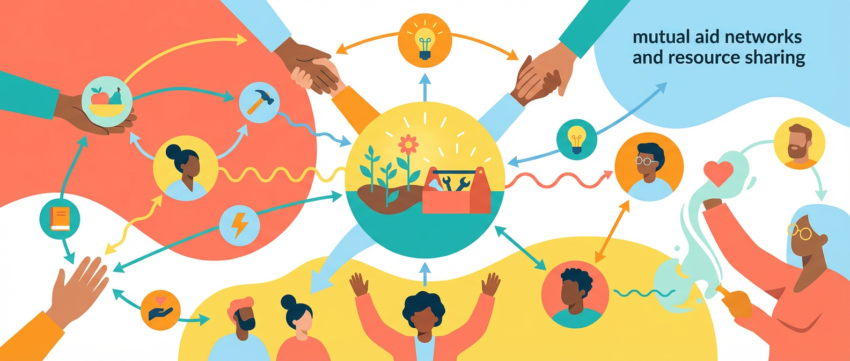
Real mutual aid isn’t the dramatic stuff that makes headlines. It’s Mrs. Rodriguez buying extra gallons of milk when she learned the family upstairs was struggling with grocery costs, then leaving them by their door with a note that said the store had a sale she couldn’t pass up. It’s informal childcare swaps when someone has a medical appointment and can’t afford a babysitter. It’s the tool library that grew out of neighbors getting tired of buying equipment they’d use twice, and the skill shares that started when people realized half the block knew how to fix different things.
These systems work because they happen inside daily life, not separate from it. They run on ongoing relationships, not one-time transactions. Success isn’t measured in dollars moved but in the reduced anxiety that comes from knowing you’re not handling uncertainty alone. When your car breaks down and you can’t afford the repair, mutual aid means you already know three people you can ask for help thinking through options, and at least one who has jumper cables or knows a trustworthy mechanic.
The power comes from redundancy and relationships. Unlike formal services with eligibility requirements and waiting lists, mutual aid assumes people generally know what they need, and help works best when it’s immediate and unconditional. It’s built around access, not gatekeeping.
Why These Networks Keep Disappearing
Every time a neighborhood coffee shop closes and becomes a chain, we lose a node in the network. Every time someone moves because rent jumped beyond their budget, we lose the relationships that made resource sharing possible. Every time a community garden gets sold for development, we lose both the physical space where people connected and the shared project that kept them connected.
The loss isn’t just about individual businesses or spaces. It’s about the systems that let people know each other well enough to ask for help and offer it effectively. When work schedules become unpredictable, when people commute farther for affordable housing, when community institutions close or price people out, the opportunities for building trust shrink. Mutual aid needs the kind of social infrastructure that lets people move from acquaintances to neighbors to people who show up for each other.
We’ve also turned many forms of care that used to happen informally into professional services. This isn’t necessarily bad, but it creates gaps. Professional services often can’t handle the specific, immediate needs that mutual aid covers well: the ride to pick up prescriptions, the meal when someone’s too overwhelmed to cook, the help moving furniture when someone’s back goes out. These needs are too small for formal systems and too urgent for bureaucracy.
Building Networks That Last Beyond Crisis
The mutual aid networks that stick around aren’t built around crisis response. They’re built around regular, ongoing resource sharing that makes daily life easier and cheaper for everyone involved. The community fridges that work best aren’t just emergency food sources. They’re regular stops for people who might grab lunch or contribute leftovers, creating steady traffic and investment from neighbors who use them in different ways.
Strong networks also connect different kinds of resources and skills. The neighborhood group chat that started for coordinating snow shoveling also becomes the place where people share job leads, recommend services, and organize bulk buying for everything from heating oil to school supplies. The tool library expands to include lending books and kitchen equipment, then becomes a place where people post about needing help with small projects or having a few hours to offer assistance.
What makes them sustainable is making participation easy and reciprocal. The best systems assume everyone has both resources to share and needs to meet, just not the same ones at the same time. They create multiple ways for people to contribute, recognizing that someone might offer different kinds of help at different points in their life, depending on their schedule, physical capacity, money situation, and current stress levels.
Starting With What You Have
The networks that work start small and specific. Maybe it’s coordinating with immediate neighbors to take in packages for each other. Maybe it’s a group text for parents dealing with snow day childcare scrambles. Maybe it’s pooling money to hire a plow for the shared driveway, which leads to pooling resources for other seasonal needs, which eventually becomes a habit of thinking collectively about problems that feel individual.
The goal isn’t to create a formal organization or solve every problem in your community. It’s to strengthen the relationships and systems that make it possible for people to help each other effectively when opportunities arise. Start by noticing what resources you already share informally, and what needs come up regularly in conversations with neighbors. Pay attention to the people who are already connecting others, and think about how to support or expand that work.
Consistency matters more than intensity. A small group that meets monthly to organize bulk buying or skill shares will build stronger connections than a large event that happens once. The informal networks that kicked in during the ice storm were strong because they were maintained through ordinary times, when the stakes were lower and there was time to learn how to work together.
If you’re curious about starting or joining mutual aid efforts in your area, the next neighborhood meeting might be a good place to start. Not to launch anything big, but to listen for what people are already doing and where the gaps are. Sometimes the most useful thing is just helping people find each other.