
What Actually Happened When Cities Started Testing This Idea
Last month I sat through another three-hour city council meeting where exactly two people showed up to talk about our proposed neighborhood improvements, while forty-seven people signed up to oppose something they called “15-minute cities” that bore no resemblance to what was actually on the agenda. The disconnect was so stark it felt like we were discussing two entirely different planets.

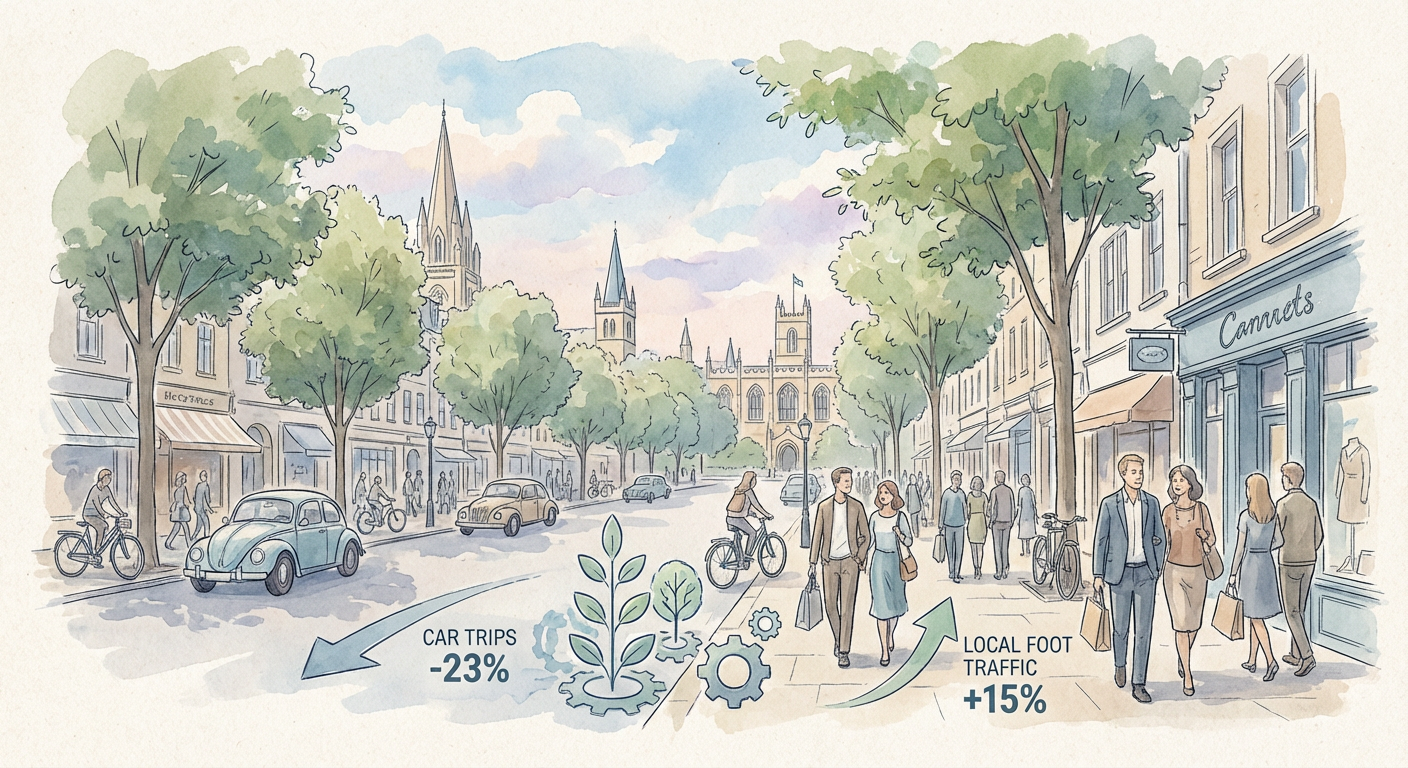
Here’s what’s actually happening in cities that have moved beyond the social media panic and into real implementation. Oxford launched their 15-minute city pilot program last September, and the early numbers tell a straightforward story: car trips dropped by nearly a quarter, and local businesses saw foot traffic jump by fifteen percent. No digital tracking systems, no movement permits, no dystopian monitoring. Just better bike lanes, more frequent bus service, and zoning changes that let corner stores open in residential areas again.
Meanwhile, Melbourne has been quietly building what they call “20-minute neighborhoods” since 2024, focusing on making sure residents can access most daily needs within a reasonable walk or bike ride. They’ve added 340 new bike lanes and helped communities establish 28 new community gardens. Paris Mayor Anne Hidalgo won re-election last year partly because voters were happy with how these changes had improved their daily lives, with satisfaction ratings jumping eighteen percent in neighborhoods where the improvements had been completed.
The C40 Cities 15-Minute Neighborhoods Report now tracks 47 cities worldwide that have made official commitments to this approach. Each one looks different because each one responds to what residents actually need and want, not some universal template imposed from above.
Where the Fear Stories Come From and Why They Stick
The gap between what cities are actually proposing and what people think they’re proposing didn’t happen by accident. Social media algorithms reward content that triggers strong emotional responses, and nothing gets clicks quite like suggesting your local government wants to trap you in your neighborhood. Add some grainy screenshots, a few out-of-context quotes from planning documents, and suddenly a bike lane proposal becomes a sinister plot to control your movement.
What makes this particularly frustrating is that the real concerns people have about their neighborhoods are completely valid. Many residents worry about increased traffic making their streets less safe for kids. Others fear that improvements will price them out as property values rise. Some small business owners are concerned that changes to parking will hurt their customer base. These are legitimate issues that deserve serious discussion and thoughtful solutions.
But when conspiracy theories about digital surveillance and movement restrictions hijack the conversation, we end up arguing about things that aren’t happening instead of working together on the real challenges we all face. The Reuters Fact Check: 15-Minute Cities Misinformation confirmed what many of us already knew: despite years of viral social media claims, zero cities have actually implemented the kind of movement restrictions or digital permit systems that dominate these online discussions.
What Cities Are Actually Trying to Solve
The push for 15-minute neighborhoods isn’t coming from some grand ideological agenda. It’s emerging from very practical problems that affect real people every day. Parents spend hours each week driving kids to activities because safe walking and biking infrastructure doesn’t exist. Seniors become isolated when they can no longer drive because there are no nearby options for groceries or medical care. Small businesses struggle to compete with big box stores located in car-dependent areas.
Climate concerns play a role, certainly, but they’re not the driving force for most residents who support these changes. People want shorter commutes, safer streets for their families, and neighborhoods where they can run errands without spending half their day in traffic. They want to know their neighbors and have places where kids can play safely. These desires cross political lines because they’re fundamentally about quality of life, not ideology.
The solutions cities are proposing vary widely, but they generally focus on making existing neighborhoods more convenient and connected. This might mean allowing small grocery stores in areas currently zoned only for houses. It could involve adding protected bike lanes or improving bus service. Sometimes it means creating small parks or plazas where people can gather. The goal is giving people more options, not fewer.
Why the Implementation Gets Messy
Even when everyone agrees on the goals, the path to get there involves countless small decisions that can create real conflict. Should bike lanes take away parking spaces or narrow driving lanes? How do you improve bus service without raising taxes? What happens when a new corner store creates traffic or noise that bothers neighbors?
These decisions affect people’s daily lives in tangible ways, and it’s completely reasonable for residents to have strong opinions about them. The challenge is that urban planning involves complex tradeoffs where someone’s benefit often feels like someone else’s loss, at least in the short term. The family that gets a safer bike route to school might live next to the family that loses convenient parking spots.
Property values add another layer of complexity. Improvements that make neighborhoods more walkable and bikeable often increase home values, which can be good news for current owners but concerning for renters and people worried about being pushed out. Cities experimenting with 15-minute approaches are also working on policies to prevent displacement, but those solutions are still being developed and tested.
The political process itself can make these tensions worse. Public meetings tend to hear from people who are either very enthusiastic or very opposed to proposed changes, while residents who are mildly supportive or have mixed feelings often don’t show up. This can make communities seem more polarized than they actually are.
Finding Common Ground in Your Own Neighborhood
The good news is that most of these challenges have solutions, and the process of finding them can actually strengthen communities. The most successful neighborhood improvement projects I’ve seen start not with grand plans imposed from above, but with residents talking to each other about what’s working and what isn’t in their daily lives.
This might begin with something as simple as a group of parents organizing walking school buses, or neighbors working together to create a small community garden. Sometimes it starts with residents asking the city to add a crosswalk or fix a broken sidewalk. These small changes build trust and show that improvements can happen without disrupting the things people value about their neighborhoods.
The key is focusing on specific, tangible improvements rather than abstract concepts or labels that trigger political reactions. Most people can agree that kids should be able to walk safely to school, that seniors shouldn’t be isolated if they can’t drive, and that small businesses should have a fair chance to compete. Starting from these shared values makes it easier to have productive conversations about potential solutions.
Whether your city is considering changes that get labeled “15-minute neighborhoods” or just trying to make streets safer and more convenient, the most important thing you can do is stay engaged with the actual details rather than the social media version of the story. Read the meeting agendas, talk to your neighbors, and remember that the goal isn’t to win arguments online but to build communities where everyone can thrive.
If this kind of local engagement appeals to you, consider joining me for our next neighborhood tree planting event this Saturday morning. Sometimes the best way to understand how cities work is to roll up your sleeves and help make them better, one small project at a time.