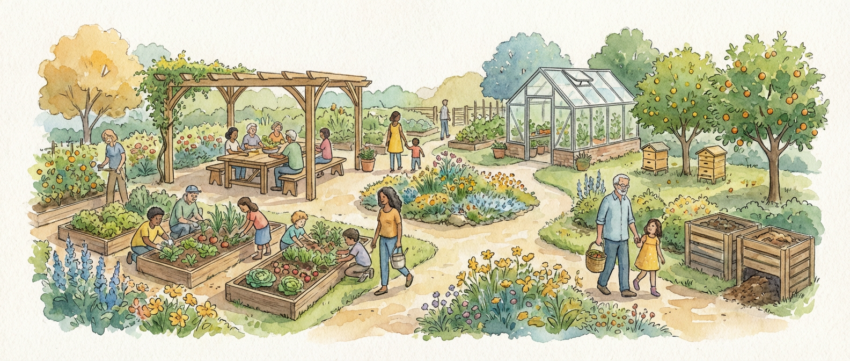
What Happened to the Hernandez Garden
The corner of Maple and Third used to smell like tomatoes in August. Not the watery kind from the grocery store, but the dense, earthy smell of fruit that ripened slowly under someone’s careful attention. Maria Hernandez had been growing vegetables there since 1987, when the city designated the lot as temporary green space after the old Woolworth’s got demolished. What started as Maria’s small plot expanded over fifteen years into something that fed twelve families and anchored a whole block’s worth of relationships.
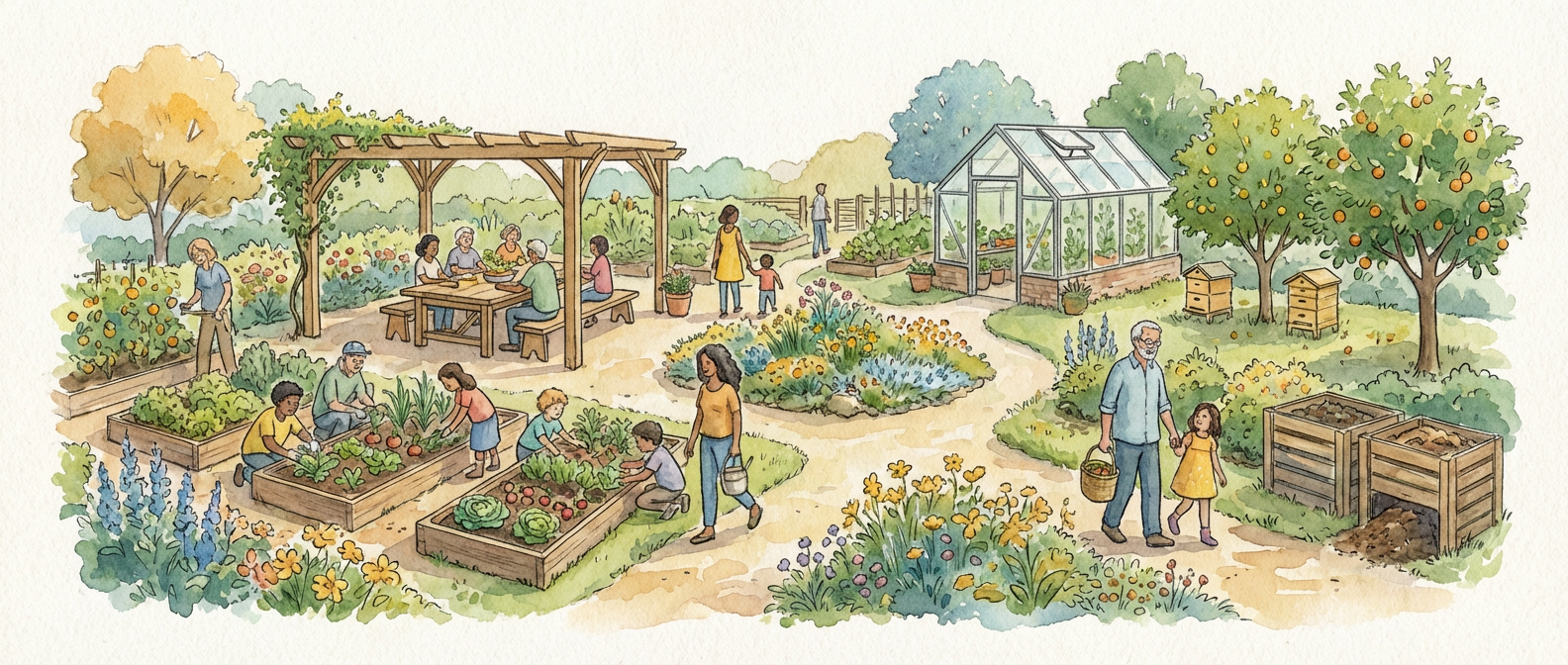
The garden disappeared in 2018 when the lot sold for mixed-use development. The building that replaced it has a yoga studio, a coffee shop, and six market-rate apartments. It’s not ugly. The developer included planters with ornamental grasses and a small seating area with metal chairs. But it doesn’t feed anyone, and it doesn’t require the kind of ongoing collaboration that made Maria’s corner into something more than the sum of its plants.
I’ve been thinking about that corner lot lately because our neighborhood association just received a proposal for a new community garden on the old gas station site three blocks over. The environmental cleanup is nearly finished, the soil tests look promising, and there’s genuine enthusiasm for the project. But enthusiasm alone won’t recreate what we lost when Maria’s garden got paved over.

The Infrastructure of Everyday Cooperation
Community gardens succeed or fail on logistics that most people never see. Maria’s garden worked because she had systems that solved the practical problems before they became conflicts. There was a waiting list for plots, managed through the parish bulletin and word of mouth. There was a schedule for the shared water timer that everyone actually followed. There was an informal but effective way to handle the guy who planted mint everywhere and the family whose kids kept “helping” by picking other people’s tomatoes.
More importantly, Maria’s garden had evolved an economy of mutual obligation that extended far beyond the fence line. Mrs. Chen traded bok choy for jalapeños. The Kowalski twins weeded extra plots in exchange for help with their senior project on urban agriculture. Maria herself spent every Wednesday evening teaching anyone who wanted to learn how to save seeds, can tomatoes, or convince stubborn peppers to actually produce.
These relationships weren’t automatic or accidental. They developed because the garden’s structure required people to solve problems together on a regular basis. The shared tools that went missing taught people to coordinate. The rabbit invasion of 2003 forced conversations about fencing and responsibility that carried over into other neighborhood issues. The seasonal rhythm of planting and harvest created predictable opportunities for the kind of casual interaction that builds trust over time.
Why New Gardens Struggle and Old Ones Thrive
The proposed garden on the gas station site comes with advantages Maria never had. There’s an official lease agreement with the city, liability insurance through the parks department, and a modest budget for infrastructure improvements. The planning committee has already secured funding for raised beds, a tool shed, and a rainwater collection system. On paper, everything looks more professional and sustainable than the informal arrangement that sustained Maria’s corner for thirty years.
But professional infrastructure can’t replicate the social infrastructure that made Maria’s garden resilient. The new garden’s bylaws include detailed procedures for plot assignment, conflict resolution, and maintenance schedules. What they can’t legislate is the web of relationships that made people invested enough to follow through on those procedures even when it was inconvenient.
This isn’t an argument against planning or proper legal frameworks. Maria’s garden ultimately failed because it lacked the institutional protection that might have saved it from development pressure. The new garden’s formal structure gives it better chances for long-term survival. But survival isn’t the same thing as vitality, and vitality can’t be designed from scratch.
Building on What’s Already Growing
The most promising aspect of the gas station garden isn’t its infrastructure or its funding. It’s the fact that three of the planning committee members are veterans of Maria’s corner lot. They understand the difference between a garden that functions and a garden that flourishes. They’ve already started talking to existing neighborhood networks instead of trying to build participation from zero.
Carmen Rodriguez, who managed the water schedule at Maria’s garden for eight years, is working with the parish social justice committee to ensure that plot fees won’t exclude families who most need access to fresh vegetables. David Park, whose family contributed tools and expertise to the old garden, is coordinating with the high school’s environmental club to create opportunities for students to earn service learning credits. Maria herself, now in her seventies, has agreed to consult on the layout and share her seed collection with anyone willing to learn proper storage techniques.
These connections matter because they represent relationships that already exist rather than ones the garden hopes to create. Carmen knows which families struggle with grocery costs during the winter months. David understands how to structure youth involvement so teenagers actually show up consistently instead of just signing up enthusiastically and disappearing after two weeks. Maria carries thirty years of local growing knowledge that no amount of online research can replace.
The Work That Makes Community Work
Community gardens don’t create community. They provide space and structure for community that already exists to become more visible and more functional. The real work isn’t planting vegetables. It’s the ongoing work of maintaining the relationships that make shared space possible.
That work looks different now than it did in 1987. We have email lists instead of parish bulletins, shared Google calendars instead of handwritten schedules posted on the tool shed. But the fundamental challenge remains the same: how do you create systems that help people solve problems together instead of avoiding each other when problems arise?
The gas station garden planning committee meets every second Tuesday at 7 PM in the community center basement. They’re working through plot layouts, water access, and soil amendments. But mostly they’re working through the harder questions about how to build something that will last longer than the initial enthusiasm. If you’ve been wondering how to get more involved in neighborhood issues, this is what the ground level looks like. Bring a notebook and prepare to learn more about soil drainage than you ever thought you needed to know.