When the Water Stopped Running
Maria Santos still points to the empty concrete channel behind the auto repair shops on Maple Street when she walks her granddaughter to school. “That’s where we used to catch crawfish,” she tells five-year-old Elena, who squints at the cracked concrete filled with shopping carts and cigarette butts. Elena nods politely, but I can see she’s trying to imagine water where there’s only dust and weeds pushing through broken pavement.
Willow Creek disappeared gradually, then suddenly. First came the upstream development in the 1980s, redirecting the flow into underground pipes. Then the drought years in the early 2000s finished what remained. By 2010, the creek bed was bone dry. What Maria doesn’t mention to Elena, but tells me later, is that those same apartments where she and her neighbors used to swim as kids also housed three families who died during the heat wave two summers ago. The creek had been their air conditioning.
This is how environmental injustice actually works in our neighborhoods. It’s not just about pollution, though we have plenty of that too. It’s about the systematic removal of the natural systems that kept our communities livable, affordable, and connected. When I started reading through city planning documents from the past forty years, a pattern emerged that residents like Maria have been living with their whole lives.
What the Numbers Actually Tell Us
The city’s 2019 heat vulnerability assessment, buried on page 47 of a climate action report that maybe twelve people read, shows our neighborhood temperatures run eight to twelve degrees hotter than areas just two miles west. That’s not an accident. Between 1975 and 2005, our zip code lost sixty-seven percent of its tree cover to make room for surface parking lots and wider roads. Meanwhile, neighborhoods with higher property values gained trees through city beautification programs and stricter development requirements.
I pulled the environmental health data too, because numbers tell stories that individual complaints can’t. Emergency room visits for heat-related illness in our area run three times higher than the city average during summer months. Childhood asthma rates are forty percent above county levels. These aren’t just statistics when you’re watching your neighbor Carlos carry his inhaler everywhere or when the community center becomes an unofficial cooling shelter every July.
But here’s what the data also shows: communities like ours respond faster and more effectively to environmental problems when we have the resources to act. After the apartment fire on Oak Street last year, neighbors organized faster than city services arrived. When the bus stop on Central Avenue flooded every winter, the Westside Neighborhood Association pooled money for drainage improvements before the city acknowledged the problem existed.
What We’re Building Back
The creek isn’t coming back, not in the way Maria remembers it. But something else is happening along that empty channel that’s worth paying attention to. Three months ago, a group of residents started meeting at Lucia’s Restaurant every Thursday morning to talk about what could grow there instead. They weren’t waiting for city funding or permission, just figuring out what was possible.
They started small. Rosa Martinez, who manages the community garden behind the library, brought seeds and knowledge about which plants thrive in disturbed soil. James Chen, who teaches environmental engineering at the community college, came with soil test kits and information about cleaning contaminated ground. Pastor Williams from Mount Olive Baptist offered storage space for tools. Within six weeks, they had permits, volunteers, and a plan for the first quarter-mile of creek bed restoration.
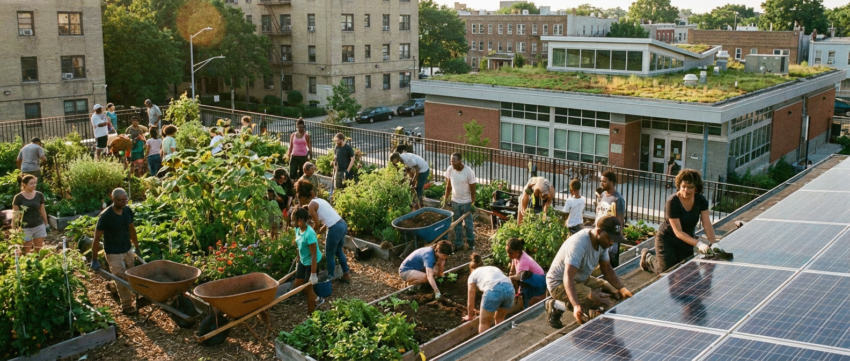
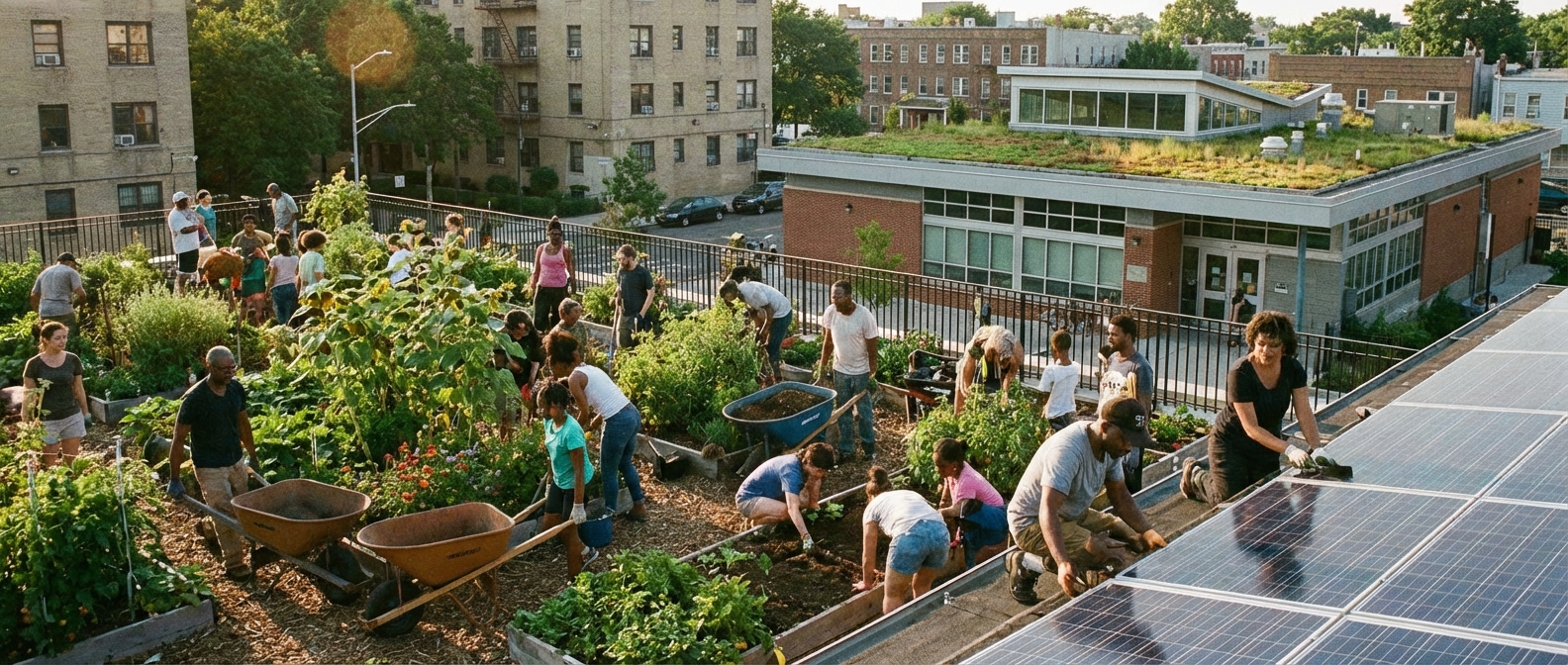
Last Saturday, forty-seven people showed up to plant native grasses and install shade structures along the old creek path. Elena Santos was there with her grandmother, learning to identify valley oak saplings. The work was hot, dirty, and slow. It was also the most practical thing I’ve seen anyone do about environmental justice in years. By next summer, that stretch will provide shade and cooler air for the apartment complex where those families died. By the summer after that, if the plants take root, the temperature difference could be measurable.
This isn’t charity work or neighborhood beautification. It’s infrastructure repair done by the people who need it most. The difference matters because it changes who controls what happens next.
How Systems Change Actually Happens
Environmental justice organizing works differently than other kinds of advocacy because the problems are literally in the ground, the air, and the water. You can’t lobby your way out of a heat island or vote away contaminated soil. You need technical knowledge, community coordination, and political pressure all working together over time. Most importantly, you need people who live with the consequences making the decisions.
That’s why the Willow Creek Restoration Project, as it’s now called, has spent as much time on city council meetings as on planting days. They’ve testified at three public hearings about updating the city’s tree protection ordinance. They’ve submitted formal comments on two development proposals that would affect neighborhood water flow. They’ve built relationships with the planning commission that go beyond showing up when something’s already wrong.
The policy changes might seem small, but they add up. The new tree ordinance requires developers to plant two trees for every one removed, with specific requirements for species and location. The updated drainage standards mean future construction projects can’t redirect water flow without community input. The revised emergency cooling protocols recognize neighborhood cooling sites beyond official city facilities.
What Comes Next
Environmental justice work moves slow because changing physical systems takes time. The trees we planted last year are still skinny saplings that provide more hope than shade. The policy changes we fought for this year won’t show results until next development cycle. The relationships we’re building with city staff and elected officials need constant maintenance to stay productive rather than performative.
But Maria Santos told me something last week that stays with me. Elena has started asking when they can go check on “their” trees along the old creek. She wants to measure how much they’ve grown, see if any birds are nesting in them yet. She’s learning that caring for a place means staying with it through seasons and years. Not just showing up when something’s wrong.
That kind of attention, multiplied across a community, changes what’s possible. It changes what we notice, what we’re willing to fight for, and what we’re willing to build ourselves when the systems that should protect us fall short. The creek that Maria remembers is gone, but the care that made it important to her lives on in different forms. Sometimes that’s how justice works: not getting back what was lost, but creating something better with what remains.